













Roby Casino Opinions In Italy

A practical guide for users in Italy who want to understand payments, mobile usage, support, and daily control.

Fortune Gems 2 Slot

Table of Contents

  • The Dog House Megaways Slot
  • Lucky Joker 10 Extra Gifts Slot
  • Sword of Ares Slot
  • Floating Dragon Hold & Spin Slot
  • Leprechaun Riches Slot
  • Fruit Cocktail Slot
  • The Dog House Megaways Slot
  • Sword of Ares Slot
  • Fruit Million Slot
  • The Dog House Megaways Slot
  • Big Fisherman Slot
  • Big Fisherman Slot
  • Seven Books Unlimited Slot
  • Roby Casino Fortune Slot
  • Sword of Ares Slot
  • Floating Dragon Hold & Spin Slot
  • 9 Mad Hats Slot
  • Floating Dragon Hold & Spin Slot
  • Big Bass Splash Slot

How to Evaluate a Casino In 2026

Evaluating a gaming platform in 2026 means looking less at the facade and much more at the user's real journey. It's not enough to see an elegant home page or a strong banner. It's important to understand how easy it is to open a profile, find the balance, access the cashier, check the history, and close the session without confusion. If these steps work well, the daily experience tends to be more organized.

Reviews 1

Imagine a simple situation. You have ten minutes free, you open your account from your smartphone, and you just want to check your balance, enter a section, and exit on time. At that moment, you don't need spectacle, you need clarity. A useful platform guides you in a few taps; a confusing platform makes you lose energy even before you start.

Then there's another point that many underestimate: the difference between initial impression and repeated use. A brief, almost curious visit is one thing. Returning every day, even for just five minutes, and performing the same actions is another. That's where the truly important details emerge.

What to Look For in the First Ten Minutes

In the first ten minutes, it's best to do a very practical test: open your profile, look for your history, find the security settings, and locate the personal control tools. Imagine you've just finished registration and don't want to play yet. If you can find these functions without wandering aimlessly, the foundation is already good. If, on the other hand, everything seems hidden or scattered, the problem isn't your eyesight: it's often the product's structure itself.

Difference Between Curiosity and Real Use

Curiosity drives clicks, real use forces understanding. When a user enters for the first time, they tend to follow their instinct: they open a category, look at an offer, touch a button. But when they start using the account for real, everything changes. They need to check how much they've deposited, understand how much they've spent, review a request, and possibly stop.

Imagine a user who logs in tired in the evening, after work, and doesn't want to get lost in ten screens. In that case, the difference between a good product and a mediocre one is stark. The former makes normal actions simple. The latter demands attention precisely when attention is lowest.

customer feedback 2

Registration, Access, and Initial Setup

Registration shouldn't feel like a race. For adult users in Italy, and in compliance with applicable rules, the healthiest path is clear: create the account, verify data, strengthen access, and calmly decide whether or not to make a first deposit. This sequence matters a lot because it sets the tone for everything that follows.

Imagine opening the platform in the evening just to prepare your profile for the weekend. You don't want to start a session right away. You want to complete the data, understand where the main functions are, and leave with the feeling that everything is under control. If the interface guides you through this, it starts well. If every screen seems to push you to the next step without letting you breathe, the account starts with more friction than necessary.

Daily access carries similar weight. Some people log in only once a day, others many more times: once to check the balance, once for a short session, once to check if a transaction has been recorded. If the login is clear and stable, these micro-visits remain light. If, on the other hand, every login becomes a minor hassle, even the relationship with the account changes.

Prepare Your Profile Before the First Deposit

Before moving money, it's worth sorting out three things: an updated profile, a strong password, and a clear understanding of where the control tools are. Imagine wanting to deposit immediately out of curiosity and only later realizing you don't know where to set a limit or how to temporarily stop your activity. At that moment, you're no longer preparing for a session with clarity; you're chasing a fix. Doing a quick check first often saves much more time than it seems.

3 reviews

Payments, Withdrawals, and Balance Control

The cashier is one of the most revealing areas of any platform. It doesn't need to promise wonders. It needs to make every step understandable: selected method, amount, confirmation, balance update, and request status. When this flow is clear, the user feels in control. When it's opaque, even a simple operation leaves a trail of doubt.

Imagine a common scenario. You enter with a moderate amount, play a bit, and then decide to stop while you're still feeling good. At that moment, you don't want another invitation to continue. You want to see what you've done, how much is left, and what path you have ahead. A well-designed cashier helps precisely there: in the transition between playing and deciding.

There's also a practical order that's worth respecting. First, decide the budget outside the heat of the moment. Then, open the cashier. After that, confirm once, and finally, re-check the balance before returning or closing. Many mistakes arise exactly when this sequence is reversed and the check comes too late.

Area

What's Worth Checking

Why It's Useful

Cashier

Metodo, importo e conferma finale

Reduces errors made in haste

History

Data, cifra e stato delle operazioni

Aiuta a seguire ogni movimento

Profile

Dati personali e impostazioni

Previene problemi evitabili

Limits

Tetto giornaliero, settimanale o pausa

Rafforza il controllo della spesa

Support

Canale di contatto e contesto

Facilita risposte più precise

Withdrawals deserve the same attention. More than an abstract promise of speed, what truly calms is visibility. If the user sees when they made the request, what amount is shown, and what its status is, the wait is managed better. When information rises, anxiety falls.

How to Read an Operation Without Guessing

Many users don't read operations; they "feel" them. They see an amount, vaguely remember what they did, and rely on memory. Imagine finishing a session and thinking you only deposited once, only to find an extra transaction you had almost forgotten. The solution isn't to panic, but to read each step in order: date, amount, status, context. This approach reduces many misunderstandings.

Catalog, Search, and Session Pace

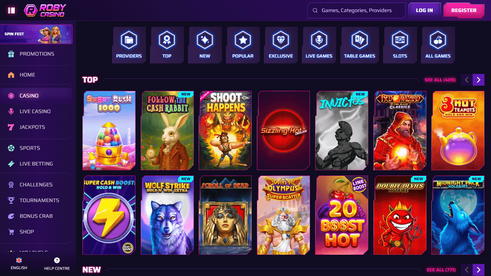
A large catalog is of little use if it doesn't help make good choices. The point isn't just how many options appear, but how they are presented and how quickly they allow you to find something that makes sense for that specific moment. Some days are for five minutes, and some days are for half an hour. Some sessions are light, and others are more considered. A good library should make this difference visible.

Imagine you have twenty minutes free and a budget already decided. You don't need to discover everything. You need to find a quick and coherent direction. If the filters are clear, favorites easily accessible, and recent content well-organized, the product works in your favor. If, however, everything is placed on the same level, abundance quickly turns into effort.

Pace matters as much as quantity. A tired user, logging in from mobile in the evening, tends to read less and click more. That's why the clarity of the catalog isn't an aesthetic detail but a true decision-support function.

How to Choose Based on Time and Budget

Choosing well means first understanding what kind of session you want to have. Imagine logging in with little time and the idea of keeping everything under control. In that case, it's best to aim for something simple to start, simple to read, and simple to leave. If, however, you open the catalog without a precise intention, you risk spending more time searching than deciding with clarity.

When Stopping Is More Beneficial Than Continuing

Not all good decisions involve taking another spin. Sometimes the most useful choice is to stop. Imagine having already spent several minutes changing sections, opening and closing options without finding a rhythm. That's often the best sign that you're no longer choosing well. Stopping at that point protects more than a last random attempt.

Short Mobile Sessions Without Losing Control

Short sessions seem harmless by definition, but they aren't always. The problem isn't the single visit of a few minutes. The problem is when that visit repeats many times in the same day and stops being a choice to become an automatic reaction.

Imagine a normal day. You log in once to check your balance, a second time for a quick session, a third time "just to see." Taken individually, each visit seems minimal. Added up, however, they build a habit. This is where a well-designed mobile version is needed: it must make it easy to enter, but also easy to exit, with history and limits always close by.

Roby Casino Trustpilot E Lettura Delle Recensioni

External reviews can help, but only if read critically. It's not enough to see an average rating or be swayed by two opposing comments. What really matters is understanding which parts of the experience are mentioned most often: access, payments, support, account readability, ease of mobile use.

Imagine reading very positive and very negative comments one evening. If you immediately choose a side, you miss half the picture. If, instead, you compare those comments with the actual actions you would take yourself - registering, checking your balance, playing a little, reviewing a request, exiting - the material becomes more useful and less emotional.

C'è poi il tema del contesto. Un utente che entra da desktop per una sessione lunga non vive la stessa esperienza di chi usa il telefono in pause brevi durante la giornata. Nel 2026 questa differenza pesa molto, e una lettura intelligente dei feedback deve tenerne conto.

How to Interpret Contradictory Comments

Contradictory comments aren't a problem; they're material. Imagine finding an enthusiastic review of the catalog and a very critical one of the support. Instead of asking who is absolutely right, ask yourself which part of the experience matters most for your use. If the cashier and account control are central to you, then those areas should carry more weight in your reading.

Which Signals Deserve More Attention

The most useful signals are often the most concrete. A person who describes where they encountered difficulty, at what time, and with what function provides much more value than someone who simply writes that everything was perfect or everything was terrible. Imagine comparing two feedback entries: one emotional and vague, the other brief but precise. The precise one, almost always, helps you much more.

Also consider repetition. If multiple users, without knowing each other, talk about the same points of a journey, that recurrence deserves attention. It's not mathematical proof, but it's a useful signal to cross-reference with your practical test.

Support, Security & Responsible Tools

Support is best judged on small problems, not big slogans. A message that doesn't arrive, an operation that remains pending, a movement you don't remember well, or a screen that takes too long to load say more about the quality of assistance than any general promise. The useful question isn't whether support exists, but whether it understands the context and asks the right questions.

Imagine seeing a figure that doesn't convince you. The least useful thing is to keep playing, hoping the doubt disappears on its own. The most useful thing is to open the history, note the time, amount, and section, and then write a short, clear message. The clearer the context, the more likely the answer will be too.

Account security, moreover, doesn't just depend on the platform. It also depends heavily on habits: strong password, updated profile, attention to shared devices, regular check of history after each session. These are simple actions, but they leave less room for many avoidable problems.

Responsible tools deserve a visible, not symbolic, place. Limits, breaks, and self-exclusion are not decoration. They are needed when behavior starts to change, often silently. Logging in multiple times, extending short sessions, increasing the budget without having decided it beforehand: these are all signals that should be read early.

FAQ

The best way is to do a practical test, not just a visual one. Try to find your balance, history, profile, limits, and support without immediately starting to play. If you can navigate these functions naturally, the foundation is solid. If you already have to search too much at the beginning or interpret unclear buttons, it's likely that daily use will become more burdensome than it seems at first impression.

Before depositing money, it's advisable to verify that the profile is correct, the password is robust, and personal limits are easy to reach. It's also useful to decide on the budget before opening the cashier. This order may seem trivial, but it avoids many hasty mistakes. When you deposit without having sorted out the rest, any subsequent doubt weighs more and is harder to manage.

Because it transforms vague feelings into concrete data. Many believe they remember perfectly how much they deposited or how much time they spent on the platform, but the history often tells a more precise story. It helps to understand if the budget was respected, to recognize repeated habits, and to better explain any doubts to support. Consulting it often helps much more than opening it only when something seems wrong.

It makes sense as soon as you notice signals you don't like: more logins than expected in the same day, budget increased multiple times, sessions extending without a clear reason. These tools work better as prevention than as a late remedy. If you use them early, you interrupt the automatism before it becomes a habit. Waiting too long, however, makes everything more tiring, even mentally.

It depends on how you actually use your account. Mobile is often better for quick logins, balance checks, and short sessions. Desktop can be more convenient if you want to explore more calmly and see more elements together. The useful question isn't which device is "better" overall, but which one helps you make clearer decisions and better control your time and money.

The most useful information is almost always the most concrete: approximate time, amount involved, the screen where the problem appeared, and any visible message. With these elements, support understands the context faster. A long but confusing message often slows down the solution because it forces a reconstruction from scratch. A short, precise summary, on the other hand, makes the conversation much more effective.

Usually, the signals arrive before the real problem. You start changing sections without a clear reason, check your balance nervously, increase the initial budget, or log back in shortly after logging out. If you recognize yourself in one of these situations, stopping is often the most useful decision. Closing your account, reviewing your history, or activating a short break gives you much more control than trying to fix everything while the impulse is still active.

EN